Whole-home battery systems for outage protection, energy independence, and complete control over your home's electrical future. Certified installer of Tesla Powerwall 3 and Anker SOLIX, designed and installed by a single licensed contractor with the technical depth to do the work right.
Why Battery Backup Now
Power outages happen in Cincinnati. Summer thunderstorms bring down trees onto overhead lines. Winter ice events take out infrastructure across multiple counties. The 2022 derecho cut power to over 100,000 Duke Energy customers across the region. Outages aren't theoretical. They're a regular feature of life here.
For decades, the answer was a portable generator wheeled out of the garage when the lights went out, or a permanent standby generator running on natural gas or propane. Generators still have a place. But for many Cincinnati homeowners, whole-home battery storage is now the better answer.
A battery system activates instantly when the grid goes down. No fuel deliveries, no engine maintenance, no carbon monoxide risk, no neighborhood-disturbing noise. The system runs silently, automatically, and integrates with EV chargers, solar panels (if you have them), and smart panels for total energy control.
How a Whole-Home Battery System Works
A battery system has three primary components: the battery itself, an inverter (which converts the battery's stored DC power into the AC power your home uses), and a backup gateway or system controller that manages how the battery interacts with the grid and your home.
Under normal grid conditions, the battery sits charged and ready, drawing minimal power. When the grid goes down, the battery detects the outage and seamlessly transfers power to your home within milliseconds. Most appliances and electronics don't notice the transition.
When the grid comes back, the battery transfers back to grid power and recharges from the grid (or from solar, if you have it).
The system can be configured for full whole-home backup (everything in the house runs on battery during an outage) or critical loads backup (only selected circuits run, extending battery runtime and reducing system cost). Most Cincinnati homes are best served by critical loads backup unless they have specific reasons to back up the entire home.
Who Battery Backup Is For
The right buyer for whole-home battery backup is one who:
- Works from home or operates a home business that can't tolerate power loss during work hours
- Has medical equipment like CPAP, oxygen concentrators, dialysis, or refrigerated medications
- Lives in an outage-prone area with mature tree canopy and overhead lines
- Has a finished basement that depends on a sump pump during heavy rain
- Owns an EV and wants to maintain charging capability during extended outages
- Has experienced multi-day outages and decided not to live through another
- Wants long-term energy independence as part of a broader plan that may include solar
- Values silent, fuel-free, hands-off operation over the lower upfront cost of a generator
If your home has been through years of stable grid power and you don't have specific needs that require continuity, battery backup may not be the highest-return investment for your home. We'll tell you that during the assessment if it applies.
What Does Battery Backup Cost in Cincinnati?
Battery projects have two parts: the equipment and the installation. For Anker SOLIX systems, our installation labor starts at $2,000 for partial-home backup (your critical circuits, fridge, furnace, medical equipment, internet, some lights) and $3,500 for whole-home backup. Equipment is separate: the base Anker SOLIX kit starts at $5,799 and scales up with capacity. Some homes also need service work first, if your panel or service can’t support the system, we tell you before anything is ordered, not after.
Want to price the equipment yourself? Browse Anker’s systems through our installer link and use code GROUND5 for a discount, then send us what you’re looking at and we’ll tell you what installation runs for your house.
Two Battery Systems We Install
Tesla Powerwall 3
Tesla's current home battery. Integrated inverter, 13.5 kWh per unit, 11.5 kW continuous power, scalable up to 4 primary units plus expansion packs. Best fit for Tesla EV households and homeowners wanting an established brand.
Learn More ›Anker SOLIX E10
Modular whole-home battery from Anker. LiFePO4 chemistry, modular design that scales to fit your home, often lower cost per kWh than Powerwall. Best fit for cost-conscious buyers and brand-agnostic households.
Learn More ›Sizing Your System
Battery sizing is the most important design decision and the one most often gotten wrong. Oversized systems waste money. Undersized systems disappoint when they're needed most.
1. What do you want to back up?
Whole-home backup runs everything during an outage. Critical loads backup runs a selected subset (refrigerator, lights, internet, sump pump, home office, select HVAC). For most Cincinnati homes, critical loads backup is the right call. It's significantly less expensive and provides backup runtime measured in days for typical critical loads, versus hours for whole-home backup at the same battery size.
2. How long do you need to run on battery?
Most Cincinnati outages are 2 to 8 hours. Major events are 24 to 72 hours. Multi-day outages without solar require substantial battery capacity. Multi-day outages with solar can extend indefinitely as the battery cycles with daily solar charging.
3. Do you have or plan to have solar?
Solar dramatically extends effective battery runtime by recharging the system during daylight hours. A modest battery paired with solar can cover essentially indefinite outages. The same battery without solar provides one full discharge cycle, then waits for the grid to return. Sizing up matters more without solar.
What's Included in a Battery Installation
A complete battery installation involves significantly more than mounting the battery and connecting wires. Standard scope includes:
- On-site assessment and load calculation
- System sizing based on backup goals
- Equipment selection and specification
- Building permit through local jurisdiction
- Duke Energy coordination for interconnection (where applicable)
- Battery and inverter mounting
- Backup gateway or system controller installation
- Critical loads panel installation if applicable
- Conduit, wiring, breakers, and disconnects
- Grounding and bonding
- Service entrance modifications if required
- System startup and configuration
- Testing of grid-down transition
- Customer training on monitoring app
- Documentation of as-installed configuration
- Warranty registration
Recent Battery Installations
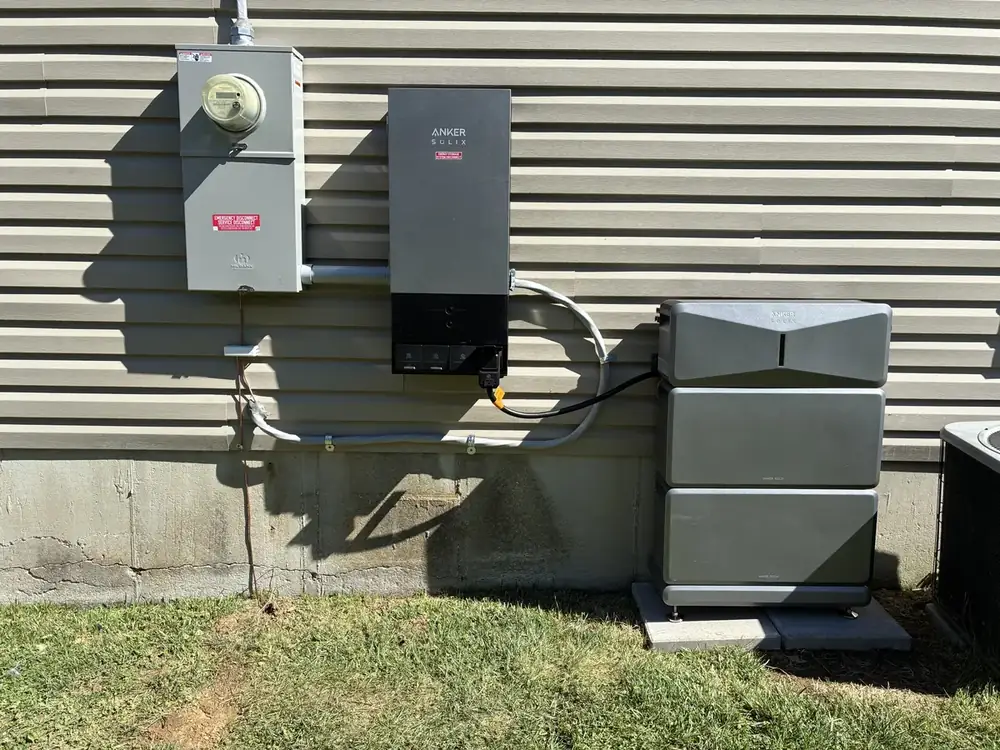
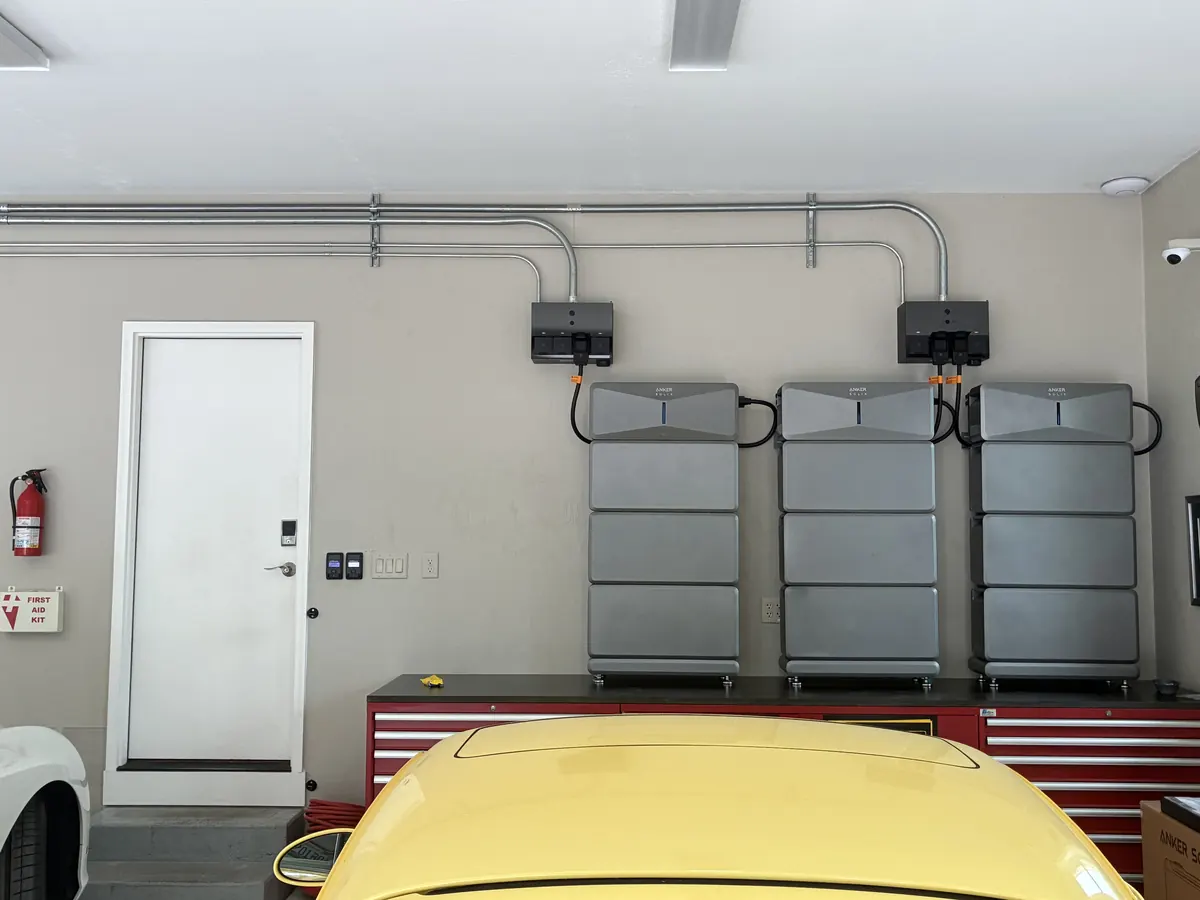
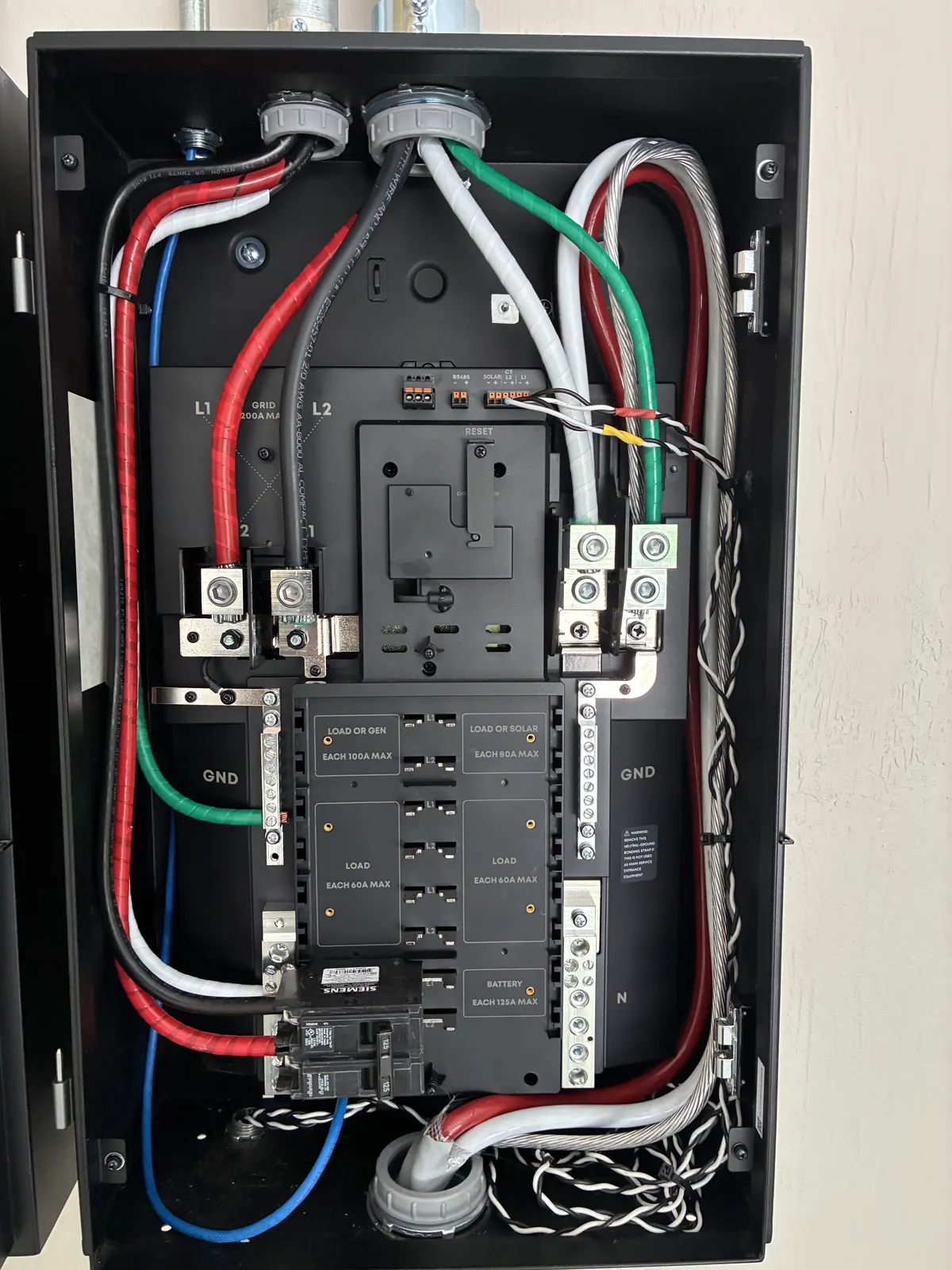
Why Ground Zero Electric
Tesla Certified. Tesla's certified installer program requires documented training, technical capability, and ongoing compliance. Verify our certification on Tesla's website.
Both of our recent Anker SOLIX E10 customers came to battery backup for the same underlying reason: they didn’t want to depend completely on the power company. One Montgomery homeowner had equipment he couldn’t afford to lose in an outage, the E10 keeps it running without him touching anything. A Florence homeowner had already lived through an outage and wanted real independence, including something most people don’t know battery systems can do: the ability to choose when to run on grid power and when to run off-grid entirely.
Anker SOLIX Certified. Confirms training and capability for SOLIX system design and installation.
Licensed and insured. Ohio CE #50964. Kentucky CE #CE66766 and ME #ME67274. Fully insured for residential and commercial work.
Single point of responsibility. One licensed contractor handles design, permits, installation, commissioning, and warranty. No coordinating between subcontractors.
Workmanship warranty. Battery installations are backed by our workmanship warranty on installation labor, in addition to the manufacturer's hardware warranty.
Honest assessments. If a battery system isn't the right answer for your home, we'll tell you. Generators, transfer switches, and load management solutions all have appropriate use cases.
Service Areas
Whole-home battery installation throughout Greater Cincinnati and Northern Kentucky, including Indian Hill, Hyde Park, Mason, Blue Ash, and Northern Kentucky. View all service areas →
Frequently Asked Questions
Plan on equipment (from $5,799 for a base Anker SOLIX kit) plus installation (from $2,000 partial-home / $3,500 whole-home). Total project cost depends on capacity and whether your electrical service needs updating. We quote the full number after a load review, no surprises mid-project.
Tesla Powerwall 3 and Anker SOLIX both carry 10-year manufacturer warranties on the batteries themselves. Real-world battery life depends on cycling patterns, but properly sized and installed systems typically deliver useful service well beyond the warranty period.
Without solar: the battery discharges and waits for the grid. Sized correctly, a battery covers typical 1-3 day outages on critical loads. With solar: the battery recharges daily from solar production. Multi-day outages are essentially indefinite as long as solar production matches consumption.
Yes. We design battery systems to be solar-compatible whether or not you have solar today. Adding solar later is straightforward.
For critical loads backup, yes. The critical loads panel separates backed-up circuits from non-backed-up circuits, so the battery only powers what you've designated. For full whole-home backup, no critical loads panel is needed, but battery sizing increases significantly.
With proper Duke Energy interconnection agreement, yes. Most homeowners use battery systems primarily for backup rather than grid export, but the option exists.
Every battery installation is custom-designed and quoted individually. Costs depend on system size, hardware selection, existing electrical system, backup load requirements, and any required upgrades. Financing available through Wisetack for qualifying installations.
Typical residential battery installations are completed in 2 to 4 days of on-site work, plus permitting and coordination time. Larger or more complex installations take longer.
Related Reading
Financing available through Wisetack (up to $25K) and Klarna (up to $10K) →
← Back to Home